TRD Defined
Treatment-Resistant Depression is depression that hasn't sufficiently improved after standard medication and therapy trials.

The Albany Clinic • July 24, 2026
When standard depression treatments haven't provided enough relief, advanced options like TMS Therapy, Spravato, and IV Ketamine offer distinct paths to recovery. Finding the right fit depends on your health history, medication preferences, timeline, and insurance coverage.
Treatment-Resistant Depression is depression that hasn't sufficiently improved after standard medication and therapy trials.
A non-invasive, medication-free option using targeted magnetic pulses. Ideal for those seeking no systemic side effects.
FDA-approved esketamine nasal spray administered under clinical supervision; widely eligible for insurance coverage.
Monitored intravenous infusions delivering rapid glutamate-targeted support for persistent symptoms.
When depression does not improve after medication, therapy, or other standard treatment steps, it can feel exhausting to keep searching for answers. Many people in Carbondale and the surrounding Southern Illinois communities start hearing about advanced options such as TMS therapy, Spravato, and IV ketamine. The challenge is knowing how these treatments are different and which questions to ask before moving forward.
You do not have to figure that out alone. These treatments are not one-size-fits-all. The best next step depends on your diagnosis, medical history, current medications, treatment goals, insurance considerations, and comfort level. At The Albany Clinic in Carbondale, the consultation process helps patients understand their options before any procedure is scheduled.
Treatment-resistant depression, often shortened to TRD, usually refers to depression that has not improved enough after appropriate standard treatments, often including antidepressant medication and therapy. The National Institute of Mental Health explains that depression can affect sleep, appetite, concentration, energy, and daily functioning, which is why ongoing symptoms deserve careful medical attention.
For some people, the issue is limited improvement. For others, medication side effects make it hard to stay on a treatment plan. Some patients feel better for a period of time, then notice symptoms returning. The Albany Clinic works with people exploring advanced care for treatment-resistant depression when traditional methods have not provided the relief they hoped for.
If you or someone close to you is in immediate danger, thinking about suicide, or unable to stay safe, call or text 988, contact local emergency services, or go to the nearest emergency room.
Each option works differently, which is why comparison is useful for patients weighing time commitment, medication preferences, supervision, and treatment goals.
These differences do not mean one treatment is automatically better than the others. The right question is more personal: which option fits your symptoms, health history, previous treatment response, schedule, and goals?
TMS may appeal to patients who want a non-medication option or who have struggled with medication side effects. Mayo Clinic describes transcranial magnetic stimulation as a noninvasive procedure that uses magnetic fields to stimulate nerve cells in the brain to improve symptoms of major depression, most often when other depression treatments have not worked well enough.
During TMS, there are no IV medications and no general anesthesia. Patients typically sit in a treatment chair while the device delivers magnetic pulses to a targeted area. Many people return to ordinary daily routines after each visit, although some may have temporary scalp discomfort or headache.
The main consideration is time. A standard TMS plan often involves repeated visits across several weeks, so patients from Marion, Herrin, Murphysboro, De Soto, or other Southern Illinois communities should think about travel and scheduling. Patients who want to learn more can review The Albany Clinic’s page on TMS therapy in Carbondale.
Spravato may be considered for adults with treatment-resistant depression when a clinician determines that esketamine is appropriate. The FDA prescribing information for Spravato notes its indication for treatment-resistant depression in adults and explains that it is administered under the supervision of a healthcare provider. Because it can cause sedation, dissociation, and blood pressure changes, patients are monitored after treatment and should not drive until the next day after a restful sleep.
Spravato is a nasal spray, but it is not a take-home medication. Treatment happens in a certified medical setting, with monitoring built into the process. This can be reassuring for patients who want a regulated treatment pathway with clear safety procedures.
Another practical point is insurance. Spravato is more commonly covered by insurance than IV ketamine, although coverage depends on the plan, diagnosis, prior treatment history, and authorization requirements. The Albany Clinic’s Spravato esketamine treatment page notes that the treatment is widely covered by many insurance plans.
IV ketamine is different from Spravato even though both affect the glutamate system. Ketamine is administered through an IV infusion in a medical setting, while Spravato is an esketamine nasal spray with a specific FDA-approved pathway for treatment-resistant depression.
IV ketamine may be discussed when depression has been persistent, symptoms are severe, or other options have not brought enough relief. Because ketamine for psychiatric conditions is generally used off label, it is important to work with a clinic that takes screening, dosing, monitoring, and follow-up seriously. The FDA maintains compounding risk alerts related to compounded ketamine products, which is one reason patients should be cautious about unsupervised or at-home approaches marketed online.
At The Albany Clinic, IV ketamine infusion therapy is provided in a supervised clinical environment for appropriate patients. The goal is to help determine whether that treatment makes sense within the patient’s larger care plan.
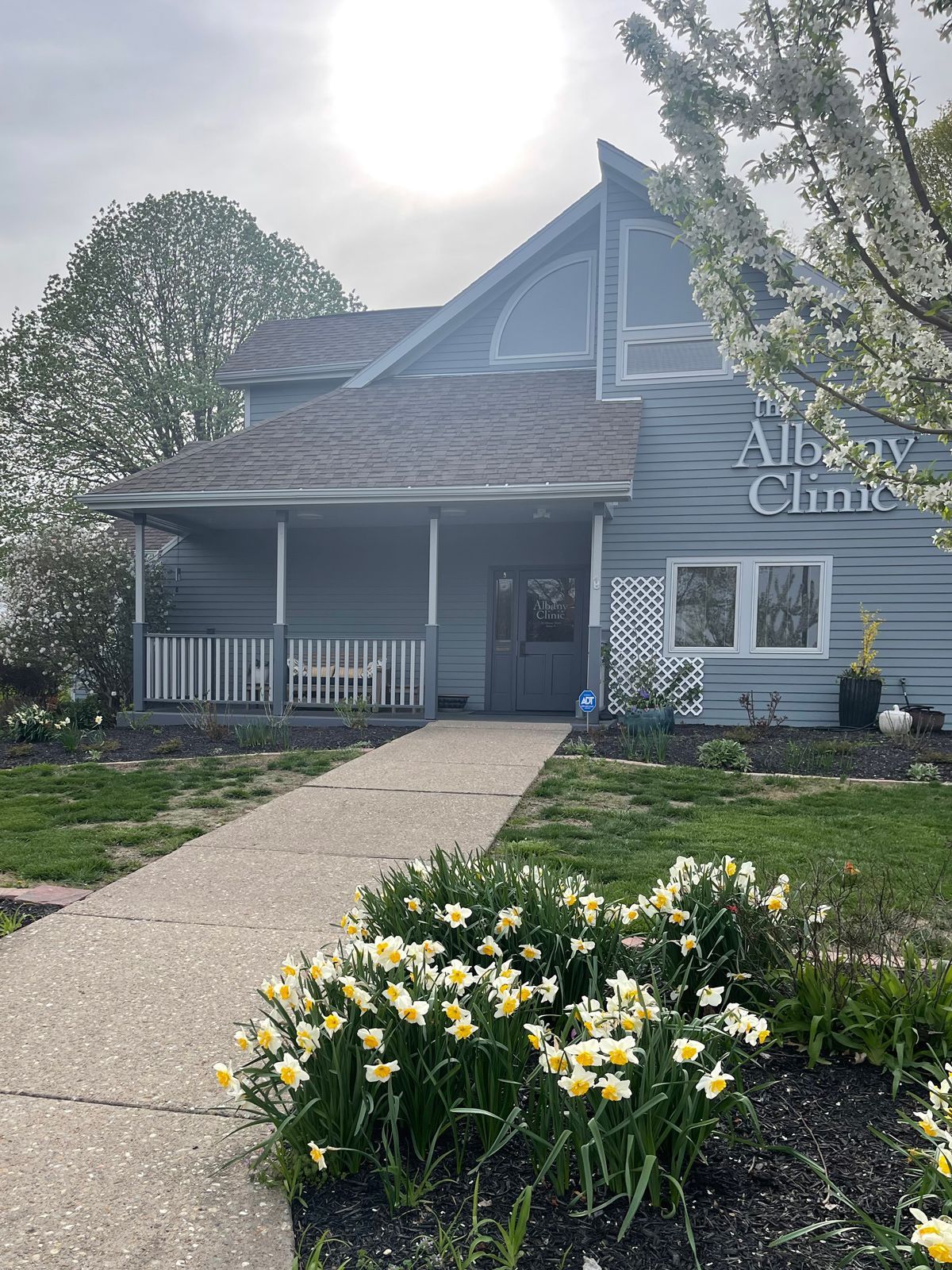
A comparison article can only go so far. The decision itself should happen through a consultation with qualified clinical guidance. The Albany Clinic’s process is built around understanding the whole person, including prior treatment attempts, current symptoms, medical history, mental health support, safety considerations, and practical concerns such as transportation or insurance.
That matters because advanced depression treatments are not interchangeable. A patient who wants to avoid medication may think differently about TMS than someone looking for a monitored medication visit. A patient who needs a treatment covered by insurance may ask different questions than someone comparing self-pay options.
The clinic also serves more than Carbondale. Patients travel from nearby Southern Illinois communities because advanced treatment options are not always available close to home. Having TMS, Spravato, and IV ketamine available through one local clinic can make the comparison process less confusing.
Before deciding on TMS, Spravato, or IV ketamine, bring specific questions to your consultation. Helpful questions include:
Good care should leave room for these questions. You should understand why a treatment is being recommended, what the alternatives are, and what the next step looks like if symptoms do not improve enough.
Living with depression that has not responded to treatment can make people feel stuck, but there are still paths worth exploring. TMS, Spravato, and IV ketamine each offer a different approach. One uses targeted magnetic stimulation. One uses supervised esketamine nasal spray. One uses supervised IV infusion therapy.
For patients in Carbondale, Jackson County, Williamson County, and nearby Southern Illinois communities, The Albany Clinic offers a local place to compare these options with a team focused on advanced depression and PTSD care. If medication has not brought the relief you need, a consultation can help you understand what may be appropriate and what questions should come next.
There is hope. For a first conversation, call (888) 804-4330 or request a consultation with The Albany Clinic today. The next step is a conversation with a team that can help you look at the full picture and choose a path with care.
A comparison article can only go so far. The decision itself should happen through a consultation with qualified clinical guidance. The Albany Clinic’s process is built around understanding the whole person, including prior treatment attempts, current symptoms, medical history, mental health support, safety considerations, and practical concerns such as transportation or insurance.
That matters because advanced depression treatments are not interchangeable. A patient who wants to avoid medication may think differently about TMS than someone looking for a monitored medication visit. A patient who needs a treatment covered by insurance may ask different questions than someone comparing self-pay options.
The clinic also serves more than Carbondale. Patients travel from nearby Southern Illinois communities because advanced treatment options are not always available close to home. Having TMS, Spravato, and IV ketamine available through one local clinic can make the comparison process less confusing.


At the Albany Clinic, our goal is to make you comfortable and provide relief for your symptoms. We accomplish this with a warm atmosphere, a caring and competent staff, and a state-of-the-art facility.