Cost & Coverage
$1,375 due at procedure time. Covers medication, sedation, and ultrasound guidance. We accept cash, card, and advance checks, providing claim forms for insurance submission.

The Albany Clinic • October 26, 2026
The Albany Clinic in Carbondale offers Stellate Ganglion Block (SGB)—a targeted, ultrasound-guided local anesthetic injection that helps calm the body's overactive "fight or flight" response in patients living with PTSD. Performed by board-certified anesthesiologist Dr. Mark Garwin to complement ongoing mental health care.
$1,375 due at procedure time. Covers medication, sedation, and ultrasound guidance. We accept cash, card, and advance checks, providing claim forms for insurance submission.
Includes IV relaxation, real-time ultrasound guidance to the right side of the neck, a 5-minute rest, and 30–45 minutes of observation before an adult drives you home.
Horner's syndrome (droopy right eyelid, smaller pupil, eye redness) confirms needle placement and clears in 4–8 hours. Mild hoarseness or site tenderness may temporarily occur.
At The Albany Clinic in Carbondale, a stellate ganglion block (SGB) costs $1,375, paid at the time of your procedure, and the fee includes the medications used. The visit itself is short: a guided injection on the right side of your neck, about 30 to 45 minutes of observation, and a ride home with an adult driver.
SGB is an injection of a long-acting local anesthetic next to a group of nerves in the neck that help control the body's "fight or flight" response. We offer it as an interventional option for people living with PTSD. Below, we cover pricing, insurance, each step of the visit, and the side effects to expect, so you can decide whether a stellate ganglion block at our Carbondale clinic belongs in your care plan.
If you are thinking about suicide or are in crisis, call or text
988 or go to the nearest emergency room. SGB does not replace emergency care.
One SGB at our clinic currently costs $1,375. That price includes the medications used during the procedure, and payment is due in full at the time of service.
The procedure uses conscious sedation, ultrasound guidance, and monitoring by our team. Some patients choose a second block several weeks later to further reduce their symptoms, so it helps to know what one and two blocks would cost before you start:
| Plan | Cost at Current Pricing | When It Is Paid |
|---|---|---|
| One SGB | $1,375 | At the time of the procedure |
| Two SGBs Spaced several weeks apart | $2,750 ($1,375 each) | Each one at the time of that procedure |
We accept cash, major credit cards, and personal checks. If you pay by personal check, the check needs to reach the clinic a few business days before your procedure, so plan ahead. Our Costs & Financing page lists current pricing for all of our treatments.
SGB prices vary from clinic to clinic, partly because of what each one bundles into the fee. When you compare, ask whether the price includes medications, sedation, and imaging guidance, and whether it covers one side of the neck or both.
Many insurance plans do not cover SGB for PTSD, although some may. We ask for payment at the time of service, then give you the information you need to submit a claim to your insurance company yourself.
Each insurer handles these claims a little differently. Here is how to approach it:
Coverage can also depend on your plan and diagnosis, so ask your insurer directly rather than relying on general rules. Our guide to
insurance-backed options for depression treatment in Illinois covers related coverage questions.
Preparation starts with a consultation and an evaluation. No SGB is scheduled until a qualified healthcare provider has evaluated you, and before your procedure day we give you written instructions tailored to your health and medication history.
Anyone can request a consultation. Primary care doctors and therapists can also send patients to us through our Refer a Patient page. SGB works alongside your ongoing mental health care, so you will keep working with your mental health provider. If you do not have one, we may refer you to a qualified provider.
Before the day of your block:
The injection itself takes only a few minutes. You lie on your back, receive medication through an IV to help you relax, and the physician uses real-time ultrasound to guide the needle to the nerves on the right side of your neck.
Here is how the procedure runs, step by step:
Ultrasound lets the physician see the structures in your neck clearly while placing the needle. Our medical director,
Dr. Mark Garwin, is an anesthesiologist with more than 30 years of clinical experience, and the skills and medications used for SGB are ones he uses daily in the operating room.
The most common effect is an expected one called Horner's syndrome: a droopy right eyelid, a smaller right pupil, and sometimes redness in the white of your right eye. It is a normal part of the block and wears off in 4 to 8 hours.
| Effect | What you may notice | How long it lasts |
|---|---|---|
| Horner's syndrome (expected) | Droopy right eyelid, smaller right pupil, redness in the right eye | Wears off in 4 to 8 hours |
| Hoarse voice or throat sensation | Hoarseness, or a feeling that something is in the back of your throat (about 20% of cases) | Temporary |
| Injection site soreness | Mild soreness where the needle went in | Temporary, with no treatment needed |
If your voice turns hoarse, take a few careful sips of water and make sure you are swallowing normally. SGB has few additional side effects.
Rarer complications are possible with any injection in the neck. A
StatPearls review of stellate ganglion blocks (NCBI Bookshelf, 2023) lists risks that include puncture of a nearby blood vessel or nerve, a collapsed lung (pneumothorax), injection into a blood vessel, and infection. The physician reviews your individual risks with you before the procedure, and ultrasound guidance helps the physician see the structures that need to be avoided.
Research on SGB for PTSD is promising but still developing, and responses vary from person to person. Some patients get enough relief from one block. Others return for a second block several weeks later.
In a 2020 randomized trial published in JAMA Psychiatry, 113 active-duty service members received either two right-sided SGBs two weeks apart or a sham procedure. After eight weeks, scores on a standard PTSD symptom scale (CAPS-5) dropped by an average of 12.6 points in the SGB group, compared with 6.1 points in the sham group. Six adverse events were reported in the trial, and none were serious.
A 2021 evidence brief from the Psychological Health Center of Excellence called the research base for SGB "emerging" and noted that more study is needed on long-term results. We share that research so you can weigh SGB with clear expectations.
When SGB helps, relief from a single block can last from several weeks to months, and occasionally longer. If symptoms return, many patients request another block.
Find clear answers regarding what to expect before, during, and after receiving a Stellate Ganglion Block at The Albany Clinic in Carbondale.


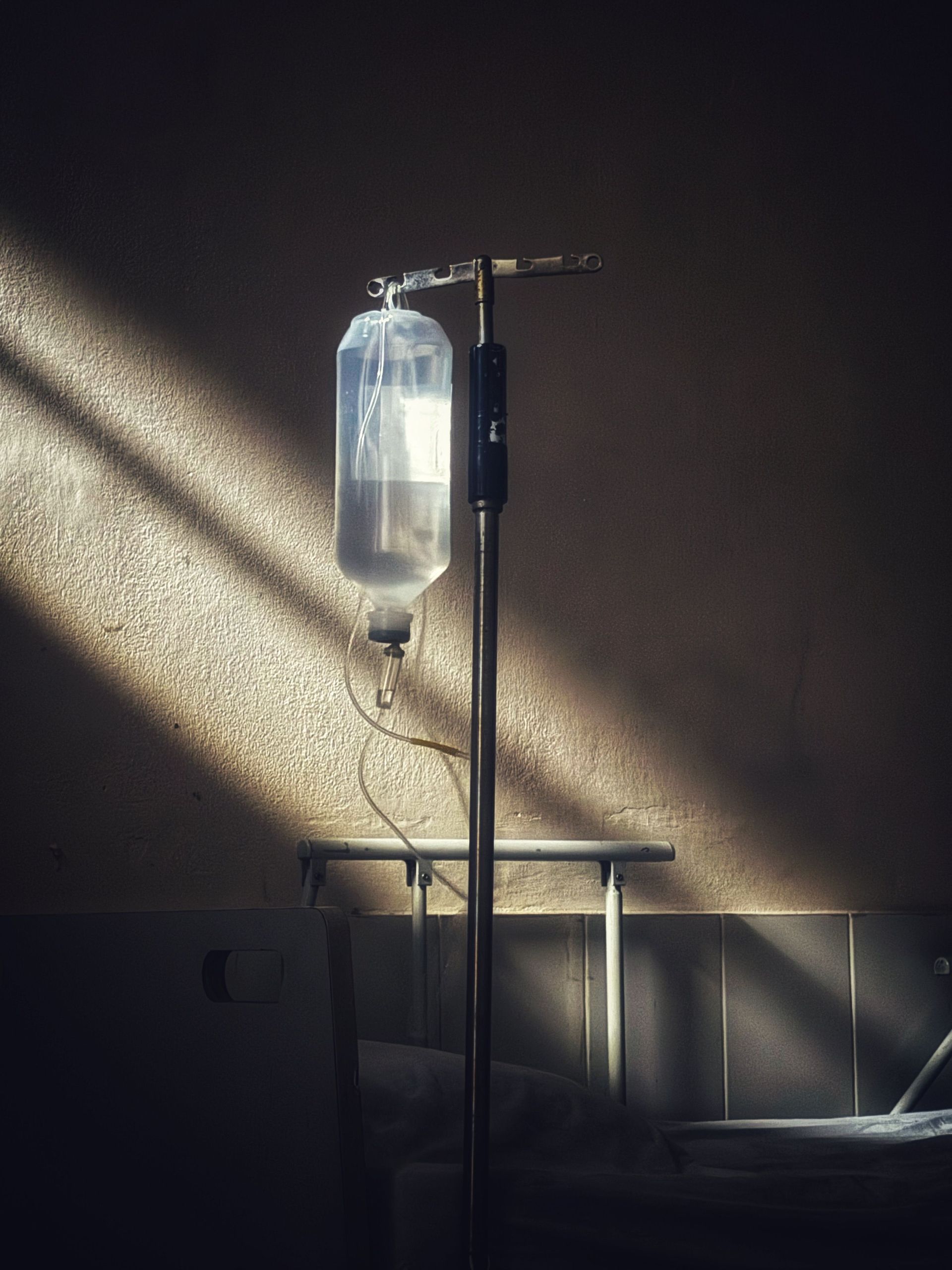

At the Albany Clinic, our goal is to make you comfortable and provide relief for your symptoms. We accomplish this with a warm atmosphere, a caring and competent staff, and a state-of-the-art facility.